Turning a New Build Wasteland into a Cottage Garden – Case Study
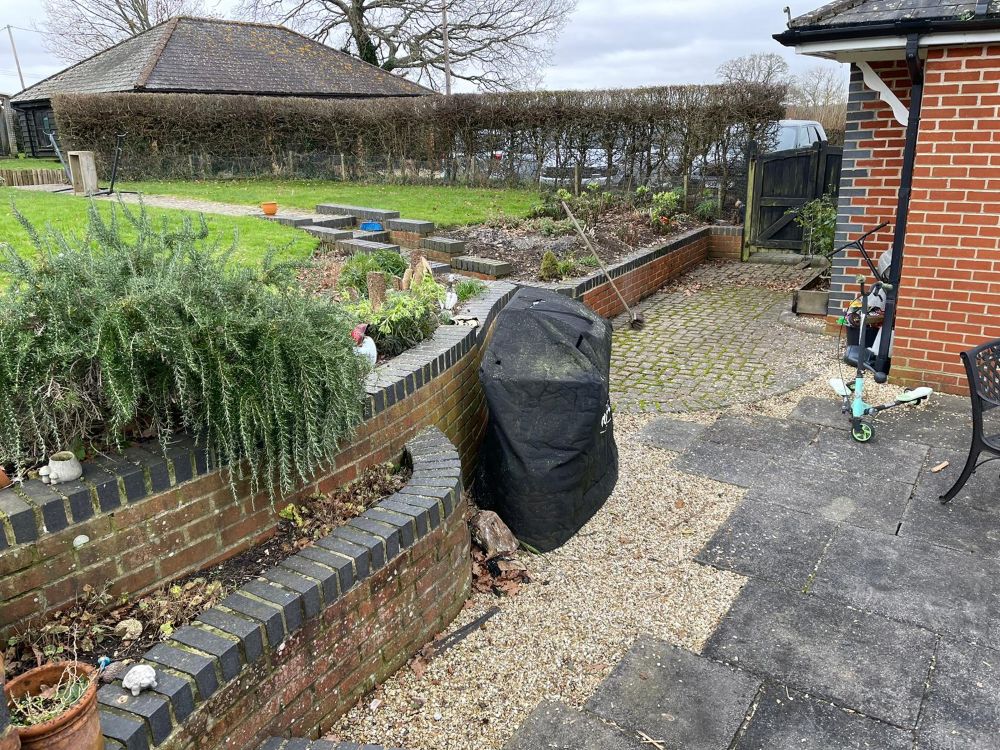
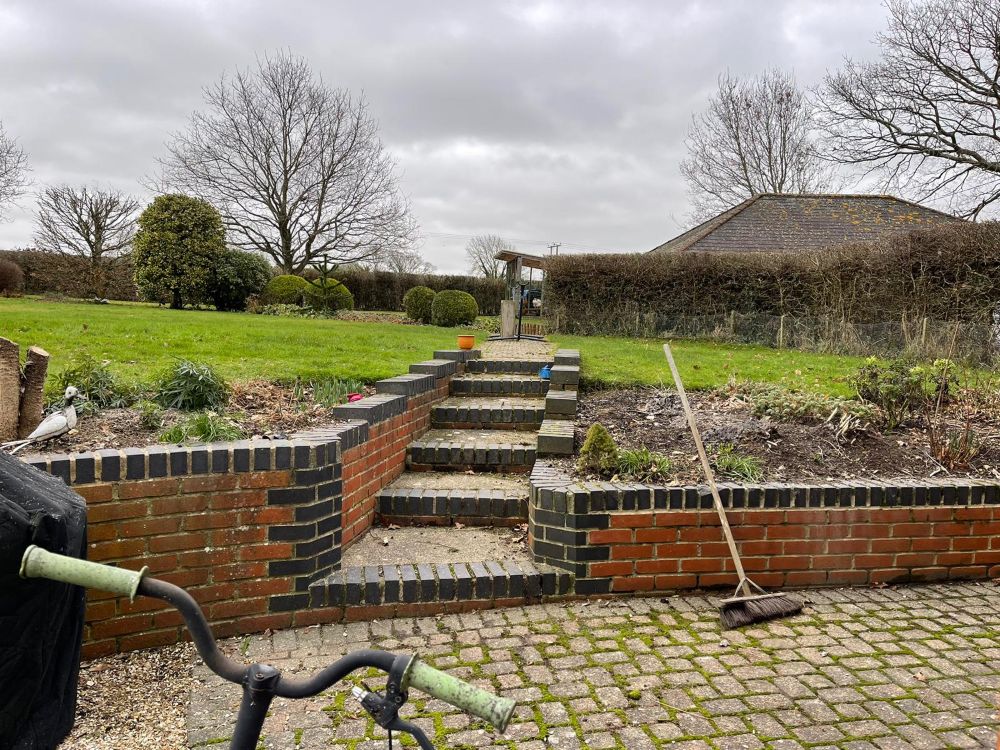
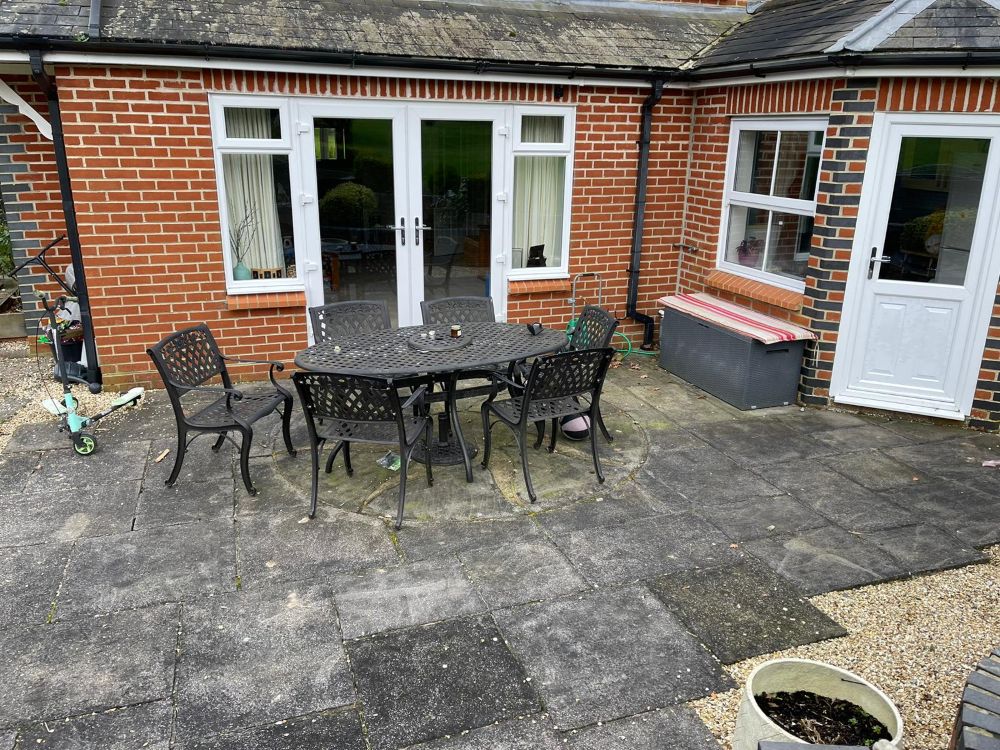
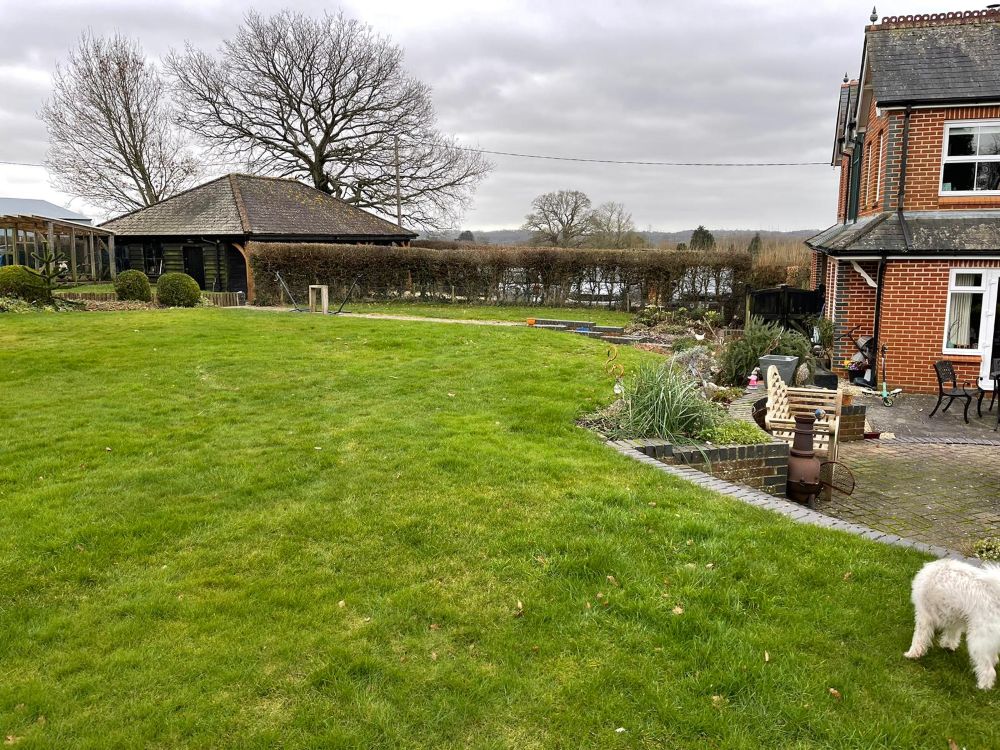
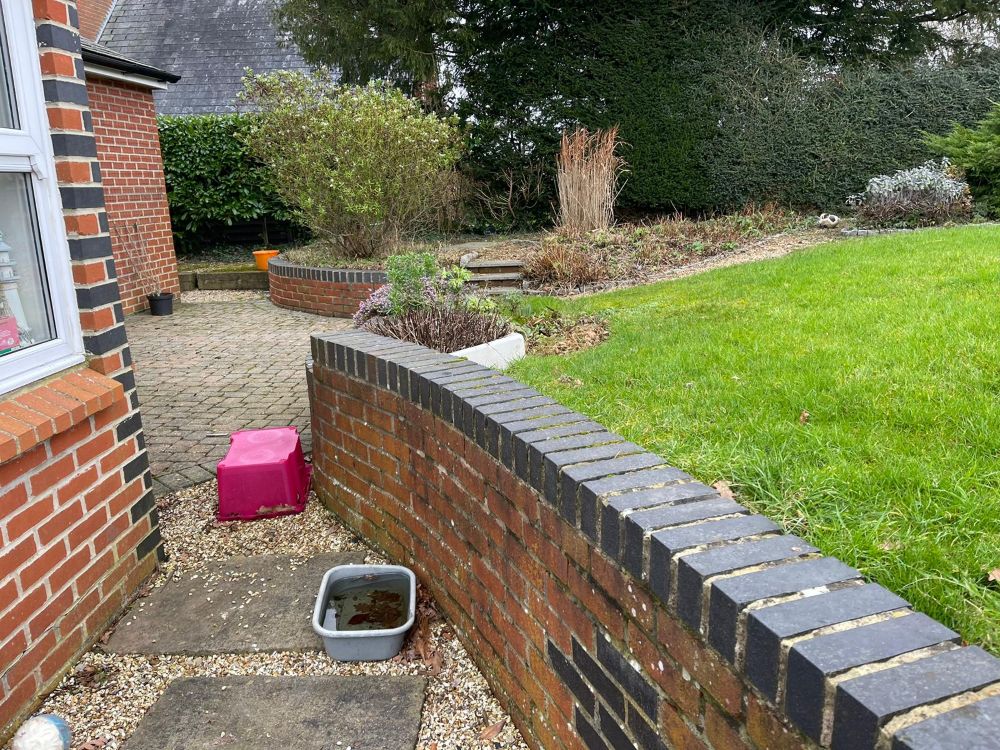
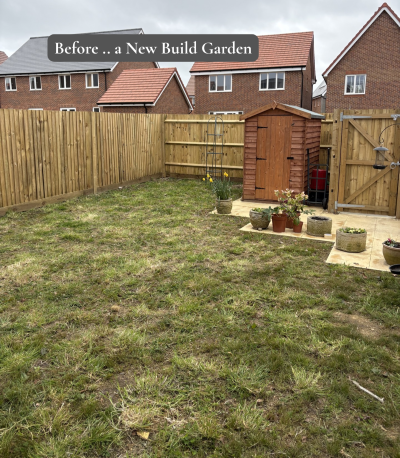
We had a lovely client who had downsized to a new-build property and, in the process, given up their established garden for a much smaller area left with poor paving and even poorer ‘lawn’ area – as is often the case with new builds.
The brief was to create a beautiful cottage garden feel, with space for dining and an additional shady area for relaxing, whilst having the practicality of being able to move bins out from their concealed location, through the garden and to the back gate. Garden design is so often about combining the aesthetically pleasing elements with the functional. They couldn’t see how they could achieve this in a relatively small space without a lawn (that they didn’t really want) within a specified budget.
The Garden Design Project & Solution
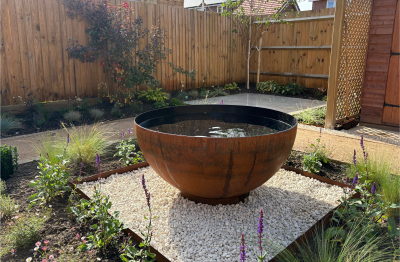
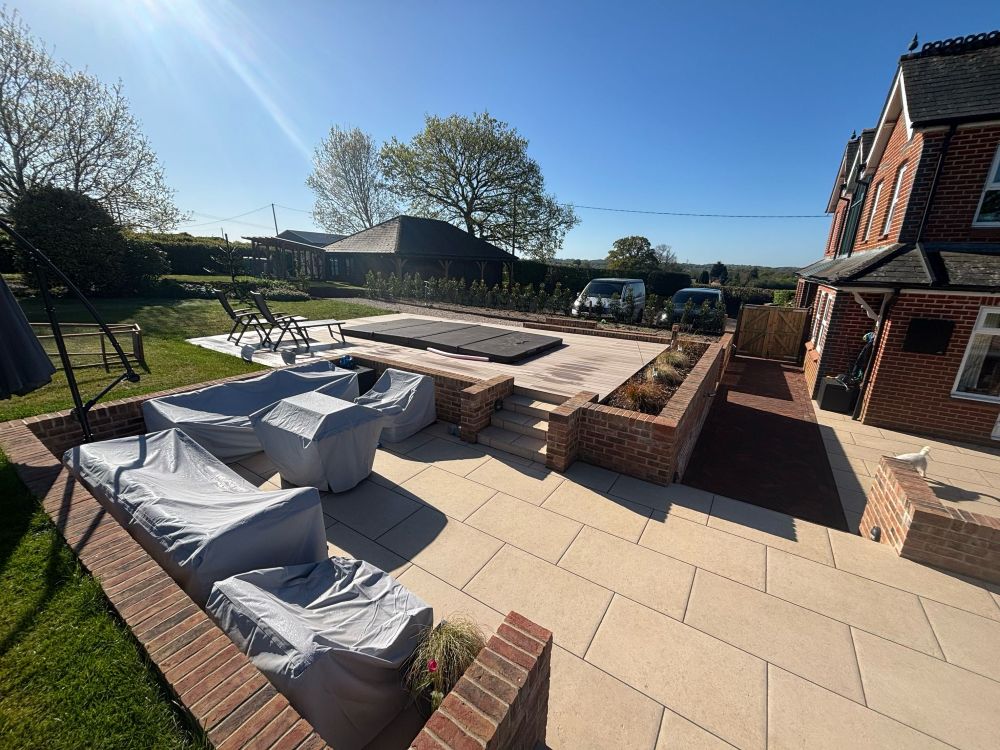
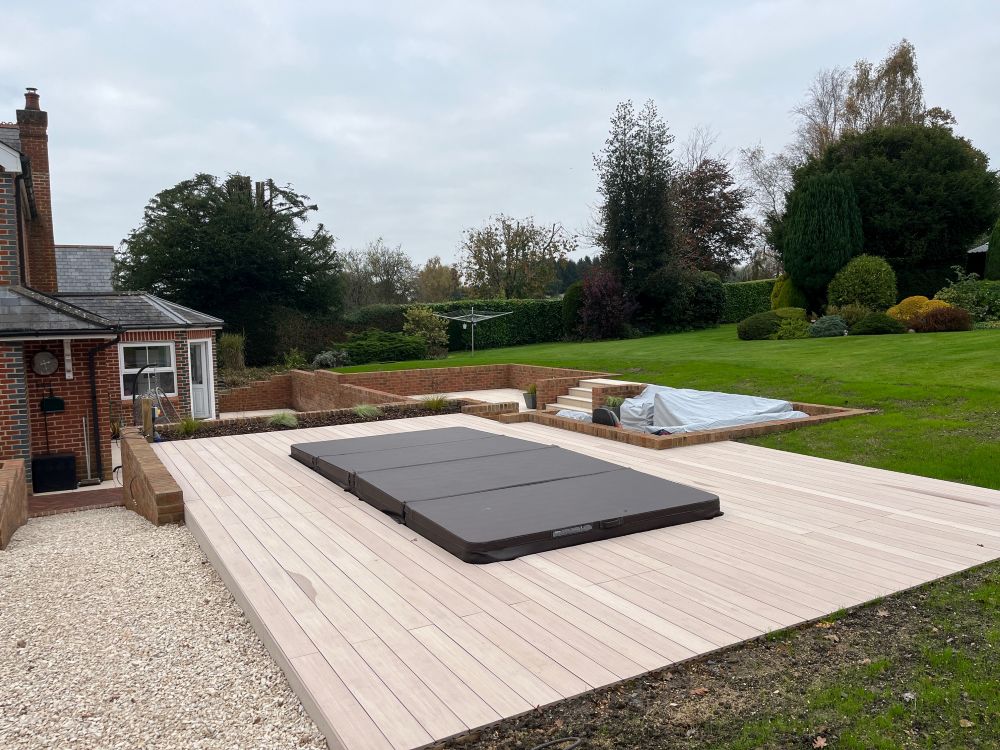
We created a central feature focused around a rustic Corten steel water bowl, which will be embellished with aquatic plants, surrounded by drought-tolerant planting, some evergreen for year-round structure. Around this, a pathway interconnects the two natural limestone terraces and the side of the house. The pathways are edged with Westminster clay pavers, the paths themselves a self-binding gravel providing a permeable but more solid surface.
The Garden Layout
The layout allowed for a much more interesting route of flow around the garden, around which you can enjoy the planting in the beds and borders created by the use of space. We ensured that we removed 35-45cm of poor-quality soil, replacing it with high-quality topsoil with incorporated organic matter so that the plants had the best start.
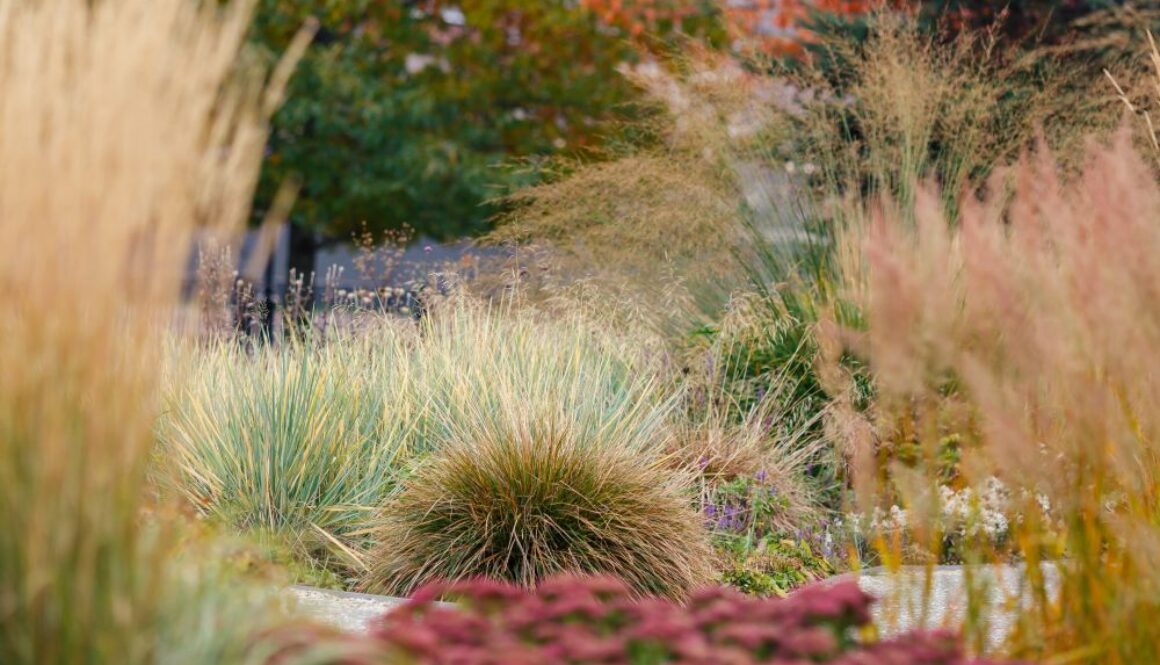
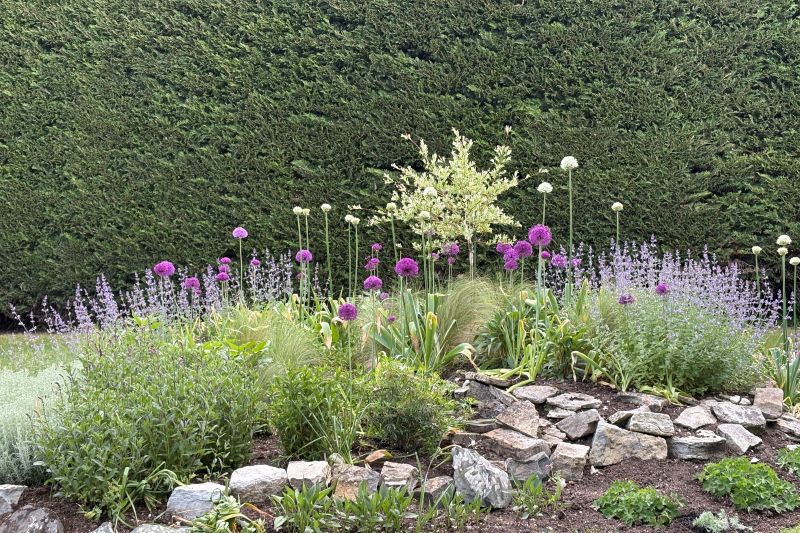
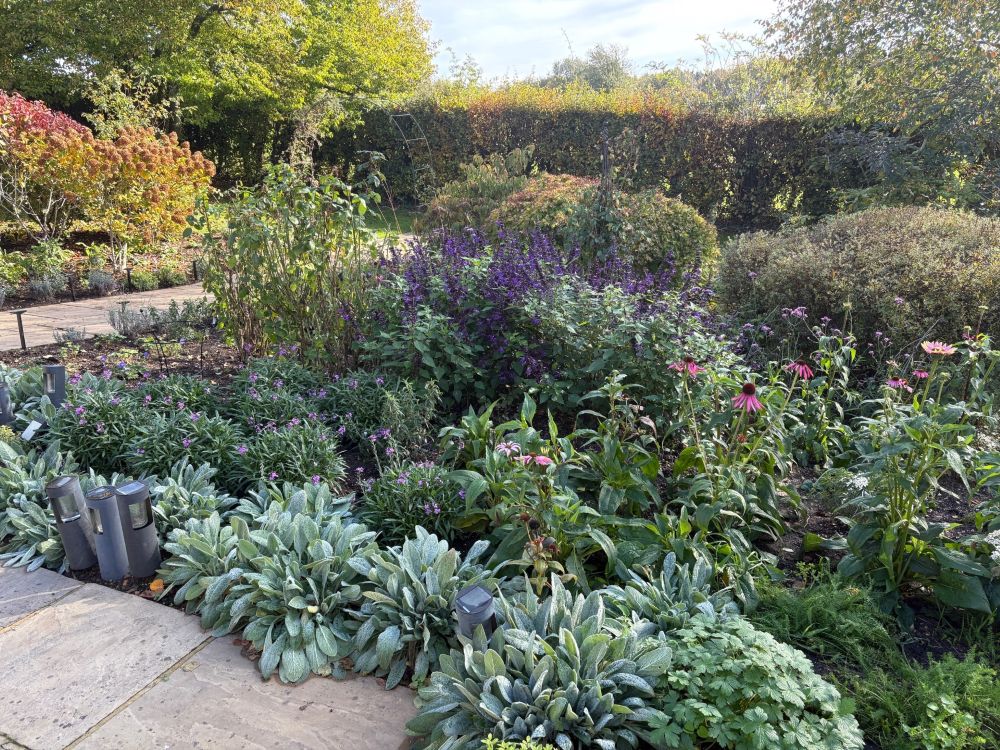
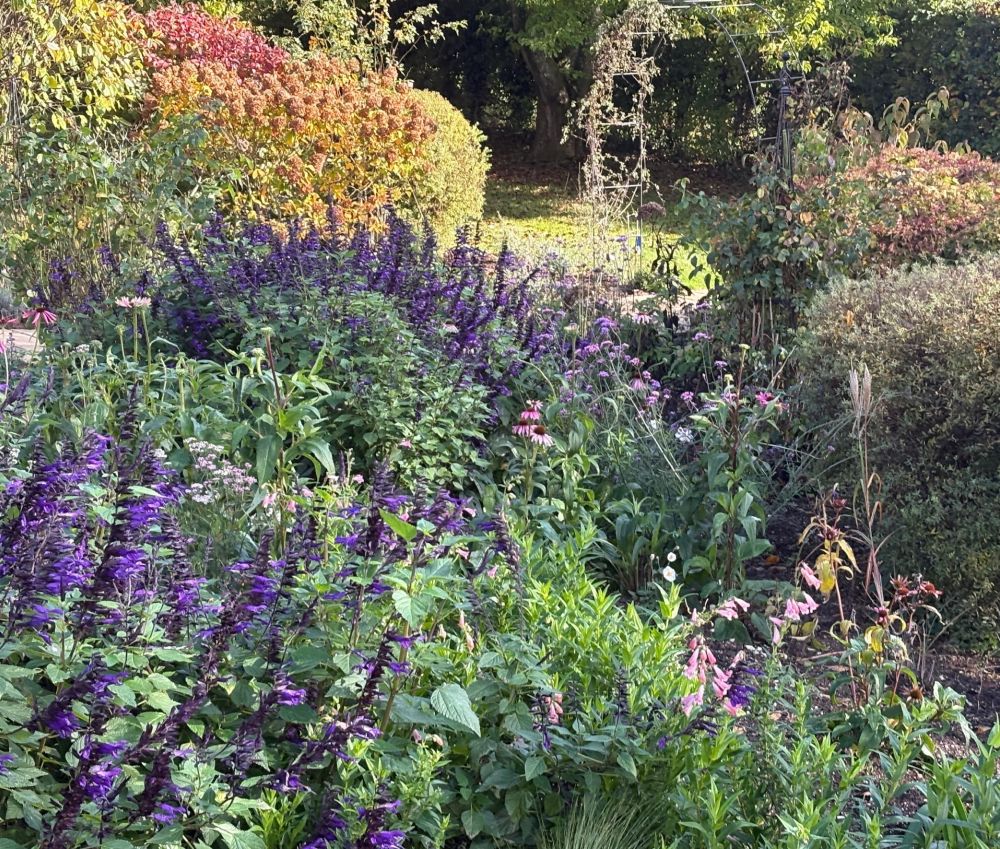
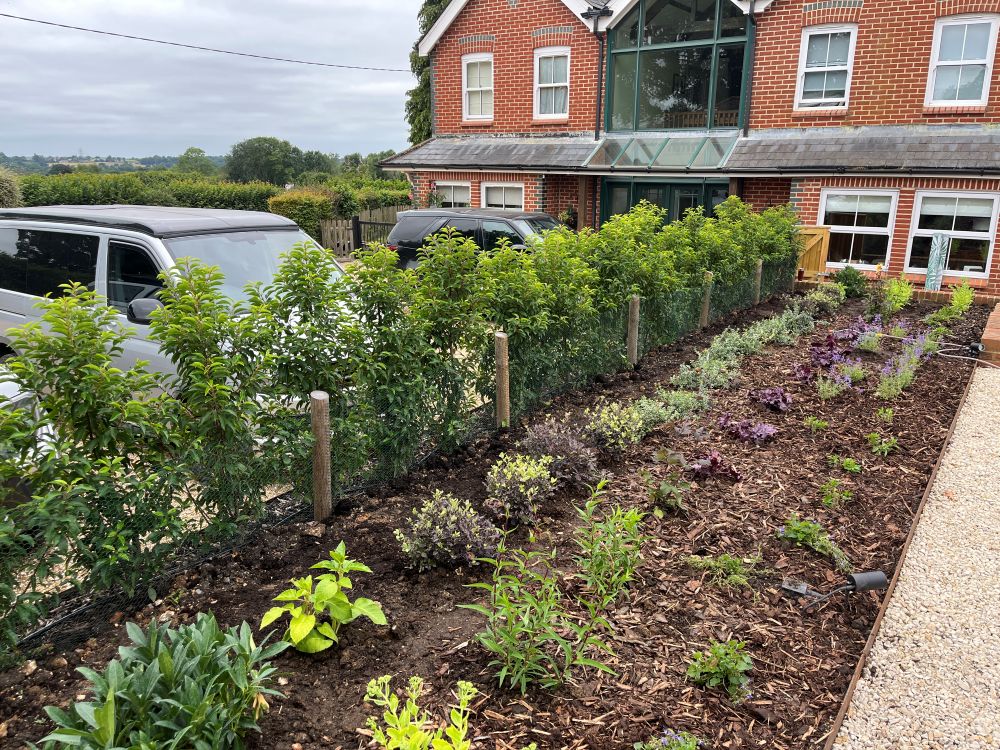
The layout ensured we had good-sized beds and borders in which we planted a range of sun-happy varieties which are also great for pollinators, from Salvia’s, Nepeta, Echinacea & Achillea to Lavender, Sedum and Ornamental Grasses. We provided mature privacy screening with beautiful Cotinus and a specimen Betula jacquemontii tree.
The garden wall now has scented climbing roses to train across it, whilst the shaded area will be enclosed with a further scented climbing rose and Mr President Clematis, underplanted with Hosta and Heuchera, from which there is a lovely view back across the water feature and planting.
Professional Landscape Collaboration
We worked hand in hand with the landscape contractor we selected for the project (Winslade Landscapes), who built the design with excellent workmanship.
The client was very, very happy with the results, in her own words:
‘Thanks to Dan at DP Garden Design, my bare new build plot has been transformed into a beautiful cottage style garden where I can relax and entertain family and friends. From the creation of an amazing design to the final planting, Dan oversaw the project, making it all very easy for me. It was a pleasure to deal with him, and I have no hesitation in recommending his company’
Before:

After: